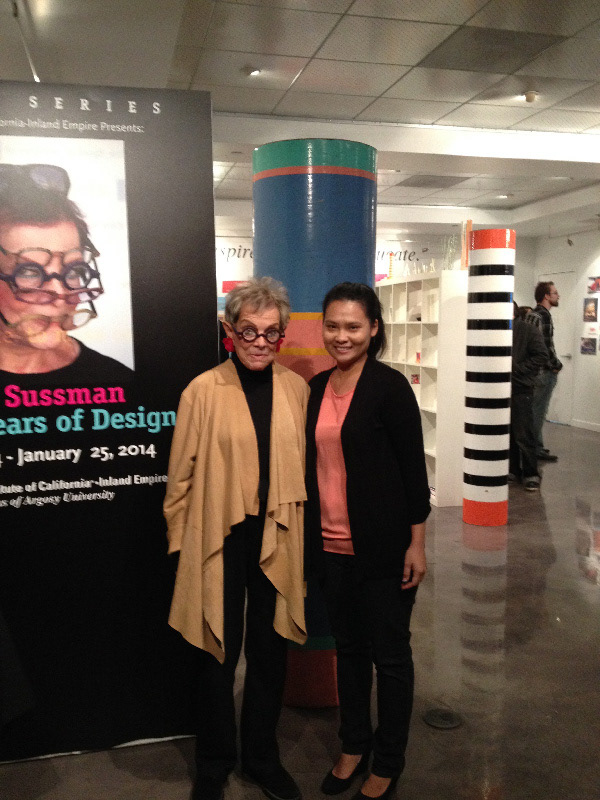
Deborah Sussman: 60+ Years of Design
I had the honor of curating an exhibition for The Art Institute of California – Inland Empire featuring more than 60 years of work by internationally renowned designer Deborah Sussman and the designers of Sussman/Prejza & Co. It was an unforgettable experience and an important milestone in my creative journey.
Although I had no budget and only one person helping with PR, we worked hard to bring the exhibition to life. Despite the challenges, we pulled together a successful opening night that made the experience even more meaningful. I am especially thankful for the advice, support, and encouragement I received from Deborah Sussman and from my instructors at The Art Institute, John Luer and Ron Landa, as well as at CSULB, Andrew Byrom and Sunook Park.
Good Design Does More Than Look Nice. It Solves Problems.
When people think about design, they often think about colors, typography, and layout. Those elements matter, but strong design is really about solving communication problems. A well-designed piece should help people understand information faster, connect with a brand more clearly, and take the next step with confidence. That is why I approach design as both a creative and strategic process. Before choosing visual directions, I think about the purpose of the piece. Is it meant to inform, persuade, organize, or build trust? Is the audience internal, external, technical, consumer-facing, or executive-level? Once those questions are clear, the design decisions become much more intentional.
Good design creates structure. It helps break complex information into something more approachable. It guides the eye. It creates rhythm, hierarchy, and clarity. In marketing, this matters because people are constantly filtering information. If a message feels cluttered or confusing, they move on. If it feels clear and purposeful, they stay engaged. I also believe good design should support the voice of the organization behind it. A financial institution, nonprofit, healthcare organization, and advocacy group all need different visual approaches, even when the goal is similar. Design should reflect the tone, credibility, and personality of the brand while still making the message easy to understand.
Over the years, I have worked on a range of materials including reports, presentations, booklets, websites, and marketing collateral. Across all of those formats, the principle stays the same: design should be useful. It should not just decorate content. It should strengthen it.
At its best, design helps ideas land the way they were meant to. It gives information shape, meaning, and momentum. That is why I do this work. I enjoy turning content into communication that feels clear, thoughtful, and effective.